Common Fish Diseases
Symptoms | Description | |
| Fish may dart around and constantly gasp. | Acid from fish wastes or decayed food. Acidic water can irritate gills and skin. The cause is acidic water. | |
| White water line. Plants die, fish have frayed fins. Alkaline water can destroy gill and fin tissues. Ammonia becomes more toxic. | Seashells or limestone in tank or hard water supply. The cause is high pH (alkaline) water. | |
 Fish die. Water may be cloudy. | Product of decaying wastes. The cause is high levels of ammonia in water. | |
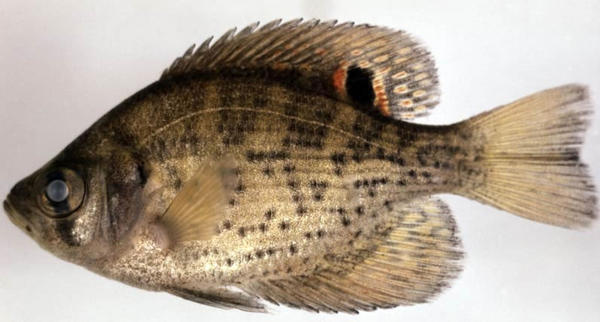 Small black specks on skin. | Small fish worms (Diplostomulum). The physical symptom are black spots. | |
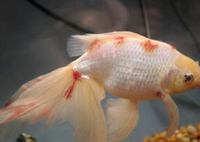 Red streaks on fins, especially goldfish. | Gyrodactylus parasites (monogenetic trematodes*), possibly bacterial septicemia. The cause is from parasites of bacterial infection. | |
| Fish dart about. gills pump furiously. | Chlorine added to water supply to kill bacteria. The cause is from chlorine in the water supply. | |
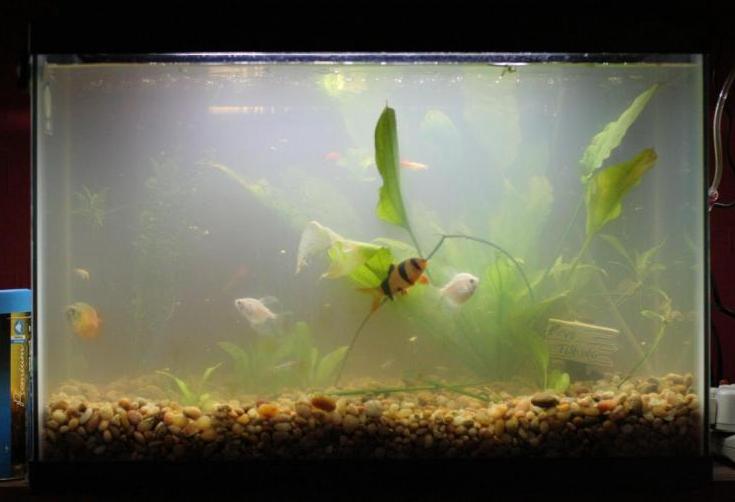 Water not crystal clear in established tank. | Wastes, small animal and plant life. Possibly over feeding. The cause is from cloudy water. | |
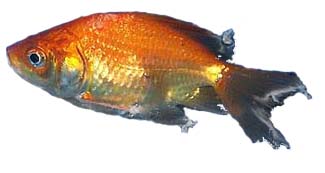 White cotton sprouting from fins or body. | A bacteria, Flexobacter (Chondrococcus) or Fungus. The cause is bacterial/fungal. |
Columnaris   |
Columnaris is often also referred to as "cotton wool disease". It is not a fungal. The bacteria is often found in fresh water, for cultured fish reared in ponds. It is most prevalent in air temperatures above 12-14C. The disease is highly contagious and the outcome is often fatal. The infections are present in well circulated, oxygenated tanks. Columnaris often results in wounds when stress is common in an aquarium or from handling, shipping or any other stress inducing factor for fish. So a diagnosis of a growing sore as Columnaris in a tank that has fish that are under constant harassment by other fish. |
Saprolegnia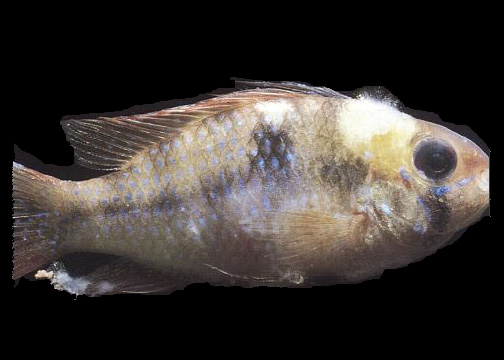 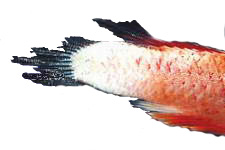 | Saprolegnia
will often get started if there is a large amount of decomposition of
nitrogenous organic material. This can be due to dead fishes left in the aquarium or
large amounts of high protein fish food such as krill/shrimp. Injured fish with open sores will amplify this potential problem. |
Ulcers  | Bacterial ulcers are a common fish disease problem, particularly with "ornamental" pond fishes, such as Goldfish and Koi. They can be caused by damage to the skin from parasites or chemicals (for example exposure to high levels of ammonia or nitrite or high/low pH). In addition, trauma can also cause ulcers - trauma by breeding efforts or bad handling. |
Pop
eye (Exophthalmia)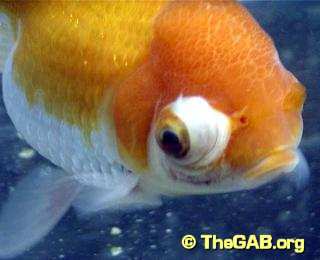 | is a condition or symptom of an underlying infection
in eyes rather than a specific disease, and it can be the result of a
number of different causes. The eye bulges out in this manner because of
fluid build up, either behind the eye or in the eye itself. the most common cause of the pop eye are: • Internal/external injury • Bad water parameter/ quality (High nitrates/nitrites/ammonia) • Internal bacterial infections by Exophthalmus and Corneybacteriosis, • Water contamination (metal or plastic poisoning) • Unsuitable salinity |
Clinostomum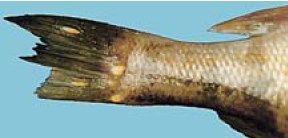 | The grubs that sometimes infect bluegills or other panfish are larval stages of a parasite called Clinostomum.
The adult parasite lives in fish eating birds like the great blue
heron. Parasite eggs pass out of the bird and the eggs hatch in the
water. Larvae from the eggs swim in the water until they find a snail,
and burrow into the snail, where they develop into second stage larvae
called cercariae. When cercariae are mature, they leave the snails and swim in the water until they find a fish such as a bluegill or other panfish. The cercariae burrow into the muscle of the fish where they develop into third stage larvae called metacercaria. When a heron eats the fish, the metacercariae develop into adult parasites in the bird and the cycle begins again. |
Fin/tail rot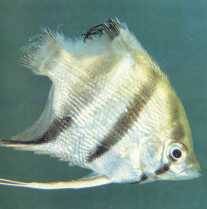 | Ragged or split fins, frequently white around the edges. Fin and tail
rot can arise from importation, rough handling, fighting, and fin
nipping – overcrowding, poor nutrition, and bad water conditions can
also contribute. |
Dropsy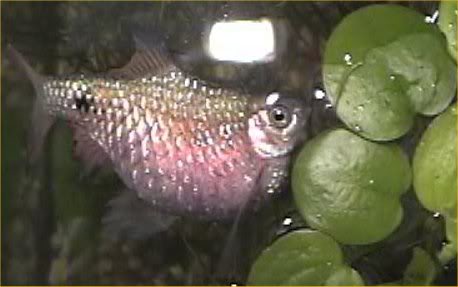 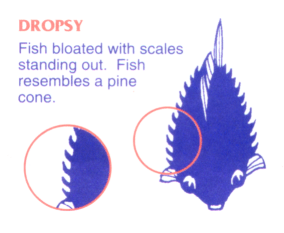 | The fish's body will become swelled with fluid it is unable to expel.
Eventually the swelling will cause the scales to rise, giving the fish
what is called the "pine-cone" appearance. Acute Dropsy: Sudden swelling: A bacterial infection will cause internal bleeding. Chronic Dropsy: Slow swelling: Growing tumors, or even parasites, in the fish may cause it to swell. Chronic Dropsy: Slow swelling: Mycobacterium tuberculosis. Highly contagious! Other unknown causes, such as a virus, or permanent damage to the fish's internal organs. Damage to kidneys can occur due to over-use of medication or use of too strong of medication. |
Swim bladder disease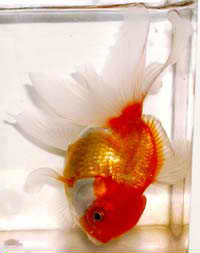 | The fish will whirl or wobble around the aquarium. Fish will sometimes float upside down, or show signs of bloating. This disease will usually have no physical signs. |
