Water
Fish and other aquatic
animal and plant life require the water they live in to be at a certain pH level
in order to be healthy. If the pH level is too low or too high, it can make
fish sick, even kill them. A low pH means that the water is acidic; a high pH
means that the water is alkaline.
What is pH?
The term pH describes
how acidic or basic a substance is. The H refers to the amount of hydrogen ions
and hydroxide ions present in the fish pond water. The lower the amount of
hydrogen ions present, the more acidic the substance. The higher amount of
hydrogen ions, the more basic the substance. The pH scale is a diagram that
provides a visual guide for the different levels of pH.
pH and Ammonia
Strong acids and bases
can dissolve into water and change the water's pH level. Rocks, chemicals, and
even adding or removing fish from your fish tank can alter the level of pH in
the water. This affects other chemicals present in the water, such as the
ammonia from fish waste. When the water's pH level drops and it becomes acidic,
the ammonia ions chemically react with the water to form harmless ammonium ions
and hydroxyl ions and carbon dioxide. Some rocks not specifically sold for fish
tanks can have harmful elements in them, such as limestone, which can raise the
pH in your water and make it more basic. When the water's pH level rises and it
becomes more basic, the ammonium ions can chemically react with the water to
form toxic ammonia ions, which can poison and potentially kill your fish.
Fish Water pH
Fish thrive when the
tank water is the same pH as the water found in their natural environment.
Different species require different pH levels. Some plants and aquatic animals
can tolerate a higher acidity content or pH than others. Our fish pond must maintain
at the level of pH6-7 .
Harmful pH Levels
Tank or fish pond water
with a low pH is highly acidic and can burn a fish's skin. Tank or pond fish
water with a high pH is highly basic or alkaline, and can chap or chemically
burn a fish's skin. Young fish are more sensitive to higher acidic water than
adult fish. Fish water that has a pH of 5 is too acidic and will kill off fish
eggs. A high pH level of 8 is for fish being quarantined.
pH / Ammonia / NO2 Tester Kit
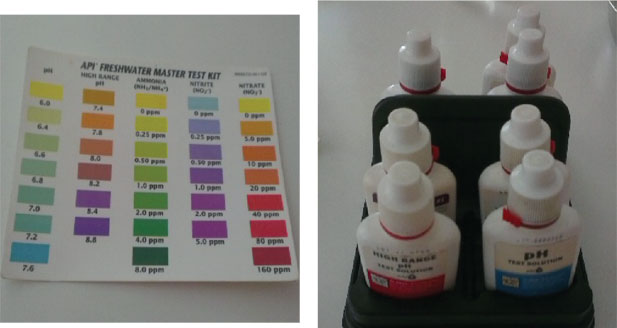
Level pH / Ammonia / NO2 to achieve
After the pond water has been tested, please refer and check against the chart above. It is important to achieve the desired levels to maintain a good water environment for fishes.
The desired levels are:
- pH level 6-7
- Ammonia - 0
- NO2 (Nitrite) - 0
Changing pH / Ammonia / Nitrite Level
Use the Freshwater Master Testing Kit, made by API to test the pond water. Test it for Ammonia levels, Nitrite levels and pH levels. If the fish pond water pH levels are too low, the water is
too acidic. To raise the pH level up, the product named "pH/KH plus" should be added. Refer to the chart provided in the box to judge how much of the product should be used. It will vary on the size of the tank and pH level. E.g. if the pH level is pH10, then more drops need to be added. If the pH level is pH7, then less drops need to be added.
To reduce ammonia and NO2, add a minimum of 3 cups of the
product named ‘Biozyme Formula 100’ into the U-pond. Wait for 30 minutes, then re-test the water again. Re-add more 'Biozyme Formula 100' is necessary, please refer to the chart provided in the box to judge how much more of the product should be used.
It is important to remember that the volume of product needed to be added into the water will differ/depend on the size of the fish pond. It is necessary to repeatedly use the tester kit in order to achieve the desired levels mentioned above.
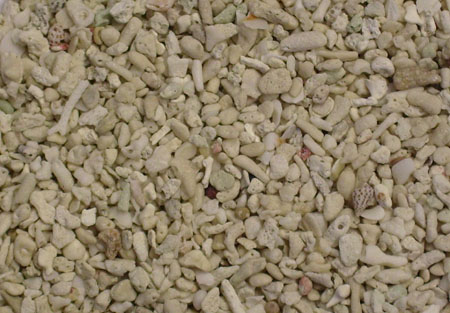
During setup, one may add ‘Coral
Sand’ (pic; above) into the fish pond as it will increase the pH
level. Why do we want to increase the pH level? When fishes are
moved into a new environment, it is normal for them to excessively
excrete and urinate. This causes the ammonia levels to increase, thereby
reducing the pH level.
By placing the coral sand into the filtration system, this will increase the pH level and neutralize the pond water. The amount used is subjective to the size of the pond and the fishes in the pond.
Click here to see how the coral sand has been placed in the U-pond filtration system.
**Coral sand can be used in fish ponds and aquariums.**
Adding new tap water into fish pond
Every week the water level in the fish
pond will be lower due to the evaporation of pond water from the Sun.
- Turn on the tap and refill an additional 10% more tap water into the
pond.
- After the new tap water has been added in, add a minimum of 5 cups of 'Tension Gone’ and a minimum of 3 cups of ‘Biozyme Formula 100’ into the fish pond.
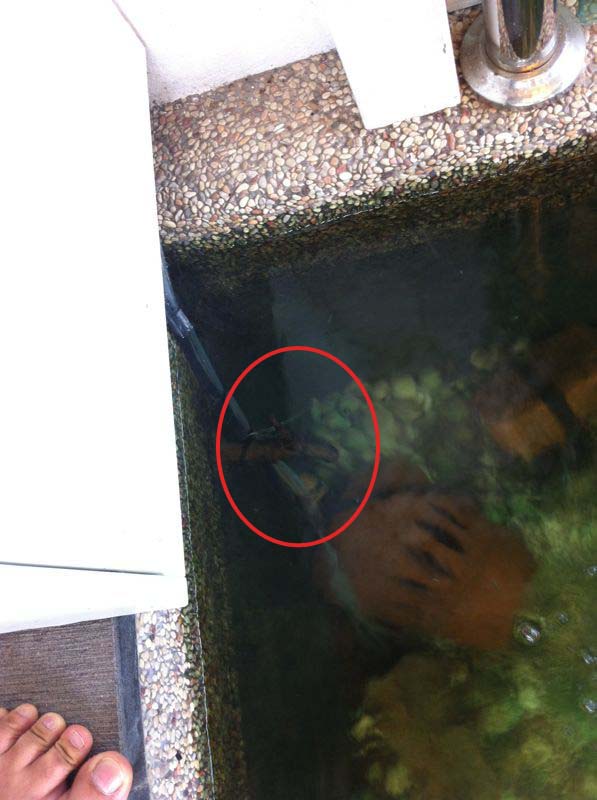
To the right of the front door (to the right of the shoe cabinet) there is a pipe within the U-pond.
